
Mobility Stories Across Europe: the North Optimizes while the South struggles to catch up
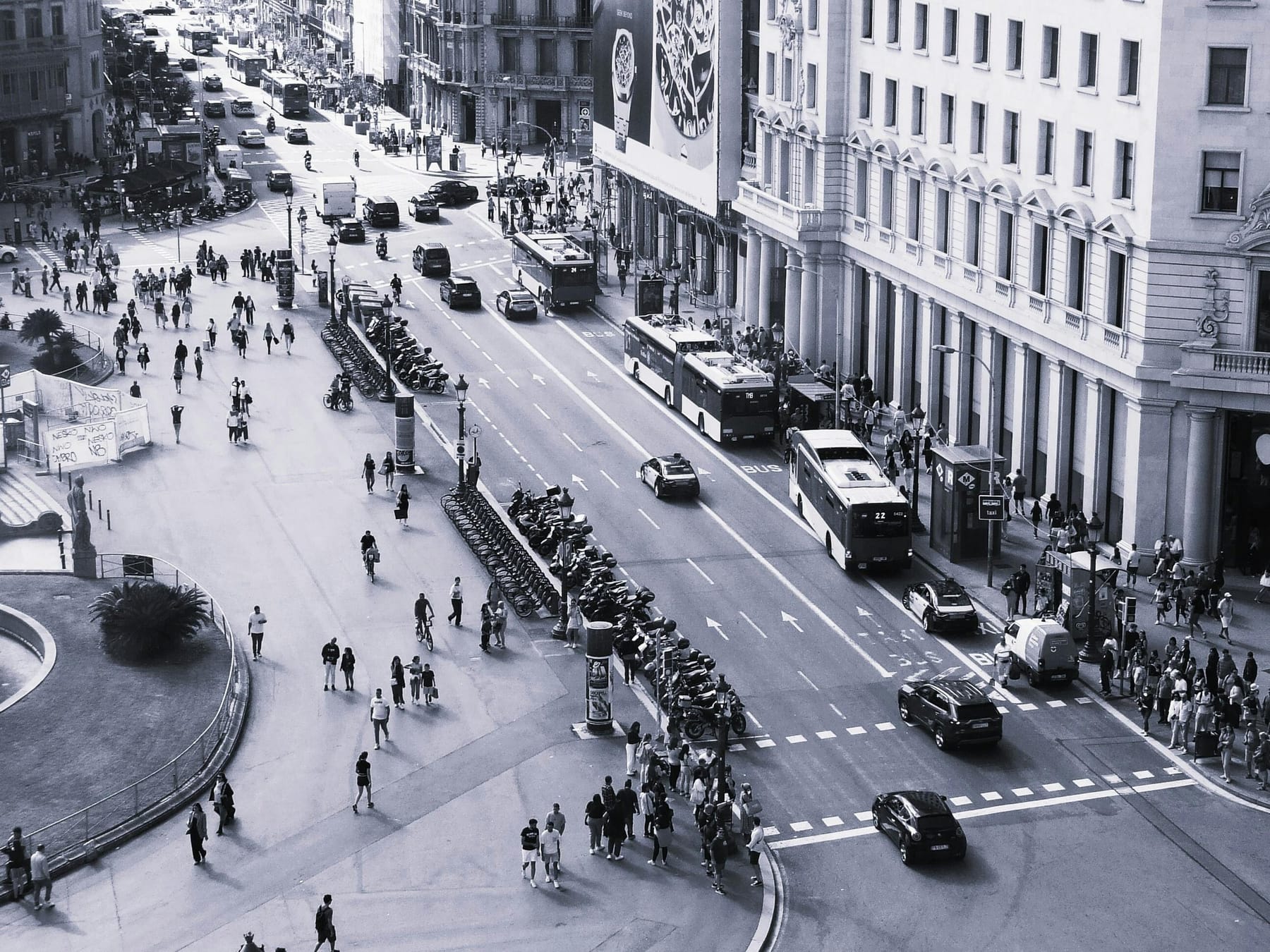
A review of just 9 citizen stories on the topic of mobility and transport coming from 7 countries from across Europe reveals a striking regional divide, not simply in infrastructure quality, but in how people experience governance itself through transport.
You can access the story collection here. This post covers the first section - Mobility and Transport.
Barcelona by Júlia Isanta Muñoz
Two Europes of Mobility
Across Central and Northern Europe, mobility stories are often about improving systems that already function. In the Netherlands, citizens describe electric car-sharing cooperatives, local organizing and conversations about reducing parked cars and shaping municipal policy. In Germany, residents mobilize to redesign streets after problematic decisions. In Paris, bike lanes and reduced car access are framed as quality-of-life improvements that make cities quieter and more livable.
Here, mobility is less about basic access and more about optimization:
Better street design
Sustainability
Shared mobility
Climate-conscious planning
Citizen participation
These stories suggest that in many northern contexts, the foundational transport system largely exists. The challenge is making it cleaner, smarter, and more democratic.
Southern Europe: Infrastructure Delayed
In Southern Europe, the tone shifts dramatically.
Italian stories describe regions left without rail for decades, with projects repeatedly derailed by political turnover and intergovernmental conflict. Spanish accounts highlight approved pedestrianization or climate adaptation projects that remain stuck in bureaucratic limbo due to missing budgets or opaque procedures. In Cyprus, mobility frustrations often intersect with broader concerns about state effectiveness.
Here, the issue is not optimization—it is delivery.
Common themes include:
Missing rail or transit links
Overreliance on cars
Political discontinuity
Bureaucratic paralysis
Approved plans without implementation
Citizens are often not asking for innovation first; they are asking for systems that were promised to actually materialize.
A Difference in Governance Experience
This divide reflects something deeper than transport.
In much of Central and Northern Europe, mobility challenges are experienced as questions of governance maturity: how to refine public systems for sustainability and participation.
In Southern Europe, mobility is more often experienced as a question of state capacity and reliability: can institutions execute long-term projects consistently?
France: Between Both Worlds
France offers an interesting hybrid. Paris reflects northern-style urban redesign and mobility transition, while other local stories point to sanitation issues, municipal neglect, or uneven responsiveness. This suggests that even within countries, governance quality can vary sharply between metropolitan and local levels.
The Bigger Insight
Transport is not just about buses, trams, or bike lanes. It is one of the clearest everyday expressions of democracy in action.
When systems work, citizens focus on improvement.
When systems fail, citizens focus on access and accountability.
In simple terms:
Northern and Central Europe often debate how to improve mobility systems; Southern Europe more often struggles with whether those systems will be delivered at all.
That distinction may be one of the clearest windows into how Europeans experience governance differently across the continent.